Publications


  1. Scholes, D.R. and K.N. Paige. 2010. Plasticity in chromosome number:coping with environmental stress. Ecology Notes, Submitted.

  2. Banta, J.A., K.N. Paige, J. Drnevich, and M. Pigliucci. 2010. Phenotypic and molecular genetic responses to apical meristem damage in Arabidopsis thaliana. Molecular Ecology. For Submission.
  3. Anderson, L.L., F.S. Hu and K.N. Paige. 2010. Morphological measures as environmental proxies: separating the confounding effects of genetic, environment and genetic X environmental influences on morphological trait expression. New Phytologist. For Submission.
  4. Sarup, P., J.G. Sørensen, T.N. Kristensen, A.A. Hoffmann,V. Loeschcke, K.N. Paige, and P. Sørensen. 2010. Candidate genes detected in transcriptome studies are strongly dependent on genetic background. PloS ONE. In press.
  5. Anderson, L.L., F.S. Hu and K.N. Paige. 2010. Phylogeographic history of white spruce during the last glacial maximum: uncovering cryptic refugia. Journal of Heredity. Published on-line October 18.
  6. Paige, K.N. 2010. The functional genomics of inbreeding: A new approach to an old problem. BioScience 21st Century Directions in Biology. 60:267-277. Invited.
  7. Paige, K.N. 2010. Conservation genetics: founding principles, primary concerns. In, Foundations in Conservation Biology, J.D. Brawn, C. Meine, and S.K. Robinson, eds. University of Chicago Press, Chicago. In press. Invited.
  8. Jacobs, T. W., C. M. Sano, K.N. Paige, and M.O. Bohn. 2009. The inflorescence replacement program of Arabidopsis. Theoretical and Applied Genetics 119:1461-1471. Published online September 29 2009.
  9. Ayroles, J., K.A. Hughes, K. Rowe, M. Reedy, S. L. Rodriguez-Zas, J. Drnevich, C. Caceres, and K.N. Paige. 2009. Genome-wide assessment of inbreeding depression: gene number, function and mode of action. Conservation Biology 23:920-930. Published online March 11, 2009. Anderson, L.L., F.S. Hu, D.M. Nelson, R.J. Petit, and K.N. Paige. 2006. Ice age endurance: DNA evidence of a white spruce refugium in Alaska. Proceedings of the National Academy of Sciences 103:12447-12450.
  10. Hughes, K.A., J. Ayroles. M. Reedy, J. Drnevich, K. Rowe, C. Carceres and K.N. Paige. 2006. Within-population variation in the transcriptome: cis versus trans regulation and dominance effects of alleles. Genetics 173:1-9.
  11. Rowe, K.C., E.J. Heske, and K.N. Paige. 2006. Comparative phylogeography of chipmunks and white-footed mice in relation to the individualistic nature of species. Molecular Ecology 15:4003-4020.
  12. Wenny, D., L.L. Anderson, D. Kirk, J. Bergstrom, D. Enstrom and K.N. Paige. 2006. Genetic consequences of ecological isolation of Swainson’s Hawk in Illinois. Journal of Raptor Research 40:270-276.
  13. Rowe, K.C., E. J. Heske, P. W. Brown, and K.N. Paige. 2004. Surviving the ice: northern refugia and post-glacial recolonization. Proceedings of the National Academy of Sciences 101:10355-10359.
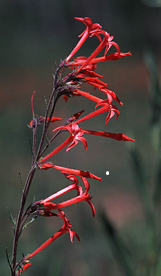
  14. Levine, M.T. and K.N. Paige. 2004. Direct and indirect effects of drought on compensation following herbivory in scarlet gilia. Ecology 85:3185-3191.
  15. Bidart-Bouzat, M.G., S. Portnoy, E.H. DeLucia, and K.N. Paige. 2004. Trait integration in Arabidopsis thaliana exposed to herbivory and enriched CO2 environments. Ecology Letters 7:837-847.
  16. Anderson, L.L. and K.N. Paige. 2003. Multiple herbivores and coevolutionary interactions in an Ipomopsis hybrid swarm. Evolutionary Ecology 17:139-156.
  17. Williams, B.L., J.D. Brawn and K.N. Paige. 2003. Landscape scale genetic effects of habitat fragmentation on a high gene flow species: Speyeria idalia (Nymphalidae). Molecular Ecology 12:11-20.
  18. Maherali, H., B. Williams, K.N. Paige, and E.H. DeLucia. 2002. Hydraulic differentiation of Ponderosa pine populations along a climate gradient is not associated with ecotypic divergence. Functional Ecology 16:510-521.
  19. Williams, B.L., J.D. Brawn and K.N. Paige. 2002. Highly polymorphic microsatellite loci for Speyeria idalia (Lepidoptera: Nymphalidae). Molecular Ecology Notes 2:87-88.
  20. Parker, R.W., K.N. Paige and A. DeVries. 2002. Genetic variation among populations of the Antarctic toothfish: evolutionary insights and implications for conservation. Polar Biology 25:256-261.
  21. Owen-Smith, N. 2002. Adaptive Herbivore Ecology: From Resources to Populations in Variable Environment. Cambridge Studies in Ecology. 374pp. The Quarterly Review of Biology 78:121.
  22. Anderson, L.L., F.S. Hu, and K.N. Paige. 2001. A molecular approach to understanding the late-quaternary history of spruce (Picea) in eastern Beringia. Paleotimes 11-12.
  23. Paige, K.N., B. Williams and T. Hickox. 2001. Overcompensation through the paternal component of fitness in Ipomopsis arizonica. Oecologia 128:72-76.
  24. Rubin, C.S., R.E. Warner, and K.N. Paige. 2001. An evaluation of the population genetic structure of Blanding's turtles (Emydoidea blandingii) in an urban landscape. Biological Conservation 99:323-330.
  25. Paige, K.N. 1999. Regrowth following ungulate herbivory in scarlet gilia, Ipomopsis aggregata: geographic evidence for overcompensation. Oecologia 118:316-323.
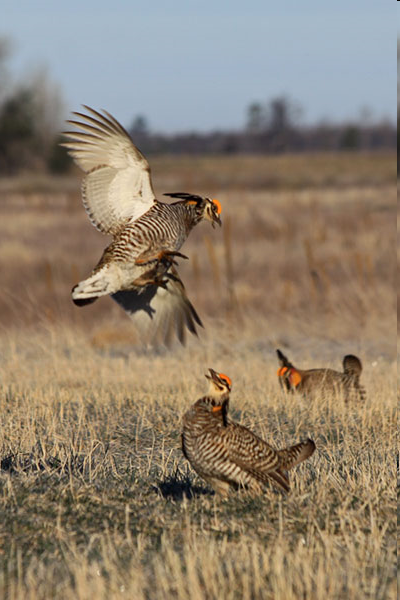
  26. Bouzat, J.L., H.A. Lewin, and K.N. Paige. 1998. The ghost of genetic diversity past: ancient DNA analysis of the Greater Prairie Chicken. The American Naturalist 152:1-6.
  27. Bouzat, J.L., H.H. Cheng, H.A. Lewin, R.L. Westemeier, J.D. Brawn, and K.N. Paige. 1998. Genetic evaluation of a demographic bottleneck in the greater prairie chicken (Tympanuchus cupido). Conservation Biology 12:836-843.
  28. Westemeier, R.L., J.D. Brawn, S.A. Simpson, T.L. Esker, R.W. Jansen, J.W. Walk, E.L. Kershner, J.L. Bouzat, and K.N. Paige. 1998. Tracking the long-term decline and recovery of an isolated population. Science 282:1695-1698.
  29. Gronemeyer, P.A., B.J. Dilger, J.L. Bouzat, and K.N. Paige. 1997. The effects of herbivory on paternal fitness in scarlet gilia: better moms also make better pops. The American Naturalist 150:592-602.
  30. Paige, K.N. and M.S. Heschel. 1996. Inbreeding depression in scarlet gilia, Ipomopsis aggregata: a reply to Ouborg and van Groenendael. Conservation Biology 10:1292-1294.
  31. Trame, A., A.J. Coddington, and K.N. Paige. 1995. Field and genetic studies testing optimal outcrossing in Agave schottii, a long-lived clonal plant. Oecologia 104:93-100.
  32. Paige, K.N. 1995. Bats and barometric pressure: conserving limited energy and tracking insects from the roost. Functional Ecology 9:463-467.
  33. Heschel, M.S. and K.N. Paige. 1995. Inbreeding depression, environmental stress, and population size variation in scarlet gilia, Ipomopsis aggregata. Conservation Biology 9:126-133.
  34. Paige, K.N. 1994. Herbivory and Ipomopsis aggregata: differences in response, differences in experimental protocol, a reply to Bergelson and Crawley. The American Naturalist 143:739-749.
  35. Lewin, H.A., E.M. Spevak, and K.N. Paige. 1993. Genetic management of herd health and productivity: molecular strategies. Proceedings of the 1st International Bison Conference.
  36. Paige, K.N. and W.C. Capman. 1993. The effects of host-plant genotype, hybridization and environment on gall aphid attack and survival in cottonwood: the importance of genetic studies and the utility of RFLP's. Evolution 47:36-45.
  37. Paige, K.N. 1992. The effects of fire on scarlet gilia: an alternative selection pressure to
    herbivory? Oecologia 92:229-235.
  38. Paige, K.N. 1992. Overcompensation in response to mammalian herbivory: from mutualistic to antagonistic interactions. Ecology 73:2076-2085.
  39. Paige, K.N., W.C. Capman and P. Jennetten. 1991. Mitochondrial inheritance patterns across a cottonwood hybrid zone: cytonuclear disequilibria and hybrid zone dynamics. Evolution 45:1360-1369.
  40. Whitham, T.G., J. Maschinski, K.C. Larson, and K.N. Paige. 1991. Plant responses to herbivory: the continuum from negative to positive and underlying physiological mechanisms. In Plant-Animal Interactions: Evolutionary Ecology in Tropical and Temperate Regions (P.W. Price & G.W. Fernandes, eds.) Wiley Publishers, pp 227-256.
  41. Paige, K.N., P. Keim, T.G. Whitham and K.G. Lark. 1990. The use of restriction fragment length polymorphisms to study the ecology and evolutionary biology of aphid-plant interactions. In Aphid-Plant Genotype Interactions (R.K. Campbell & R.D. Eikenbary, eds.) Elsevier Science Publishers B.V., pp 69-87.
  42. Keim, P., K.N. Paige, T.G. Whitham, and K.G. Lark. 1989. Genetic analysis of an interspecific hybrid swarm of Populus: occurrence of unidirectional introgression. Genetics 123:557-565.
  43. Paige, K.N. 1988. The wiliest wildflower in the west. Natural History 97:49-53.
  44. Paige, K.N. and T.G. Whitham. 1987. Flexible life history traits: shifts by scarlet gilia in response to pollinator abundance. Ecology 68:1691-1695.
  45. Paige, K.N. and T.G. Whitham. 1987. Overcompensation in response to mammalian herbivory: the advantage of being eaten. The American Naturalist 129:407-416.
  46. Paige, K.N. and T.G. Whitham. 1985. Individual and population shifts in flower color by scarlet gilia: a mechanism for pollinator tracking. Science 227:315-317. Cover photo featured for this issue.
  47. Paige, K.N., L.A. Mink, and V.R. McDaniel. 1985. A broadband ultrasonic field detector for monitoring bat cries. Journal of Wildlife Management 49(1):11-13.
  48. McDaniel, V.R., M.J. Harvey, C.R. Tumlison, and K.N. Paige. 1983. Status of the small-footed bat, Myotis leibii in the Southern Ozarks. Proceedings of the Arkansas Academy of Science 36:92-94.
  49. Paige, K.N., C.R. Tumlison, and V.R. McDaniel. 1981. A second record of Typhlichthys subterraneus from Arkansas. Southwestern Naturalist 26:67-68.
  50. Sutton, K.B. and K.N. Paige. 1980. Geographic distribution: Ambystoma talpoideum. SSAR Herp Review II (I):13.
  51. McDaniel, V.R., K.N. Paige, and C.R. Tumlison. 1979. Cave fauna of Arkansas: additional invertebrate and vertebrate records. Proceedings of the Arkansas Academy of Science 33:84-85.
  52. Paige, K.N., C.T. McAllister, and C.R. Tumlison. 1979. Unusual results from pellet analysis of the American Barn Owl, Tyto alba pratincola (Bonaparte). Proceedings of the Arkansas Academy of Science 33:88-89.