
Welcome to the Dalling Lab!
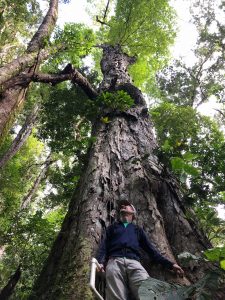
Tropical rain forests are the most complex ecosystems on earth. We work at multiple scales and sites to understand the determinants of forest structure and dynamics, local community coexistence, and the regeneration success of individual species. Our research develops from studies of the natural history of tropical trees and often involves collaborative projects to address specific questions of ecology and physiology.
Our current research mostly focuses on how plant-fungal and plant-soil interactions impact recruitment processes — from the initial contact between seeds and their fungal mutualists, through the mycorrhizal associations that develop in seedlings, to the microbially-mediated feedbacks that occur as wood decomposes.
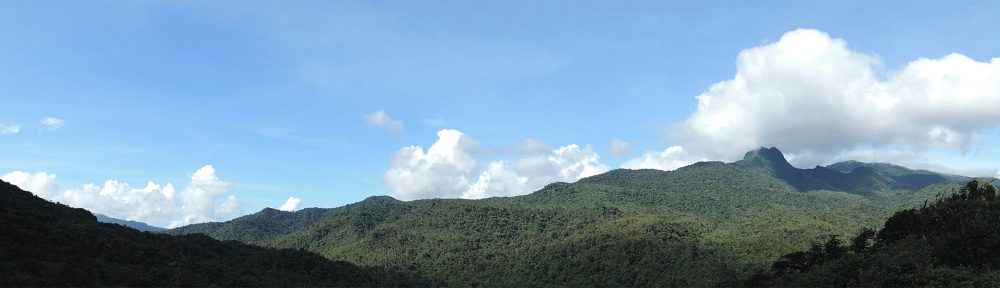
Much of our work is conducted at the Smithsonian Tropical Research Institute in Panama, where we maintain a lab for seed-fungal work on Barro Colorado Island. We have also developed a network of permanent forest plots ranging from 750 to 3200 m elevation in montane forests in western Panama that are accessed from the Fortuna field station.
In Illinois we established the Trelease Woods Forest Dynamics Plot, (currently undergoing the first recensus) part of the ForestGeo plot network. This collaborative project with Prof. Jennifer Fraterrigo, is funded and implemented by undergraduate students through the incredible Student Sustainability Committee .